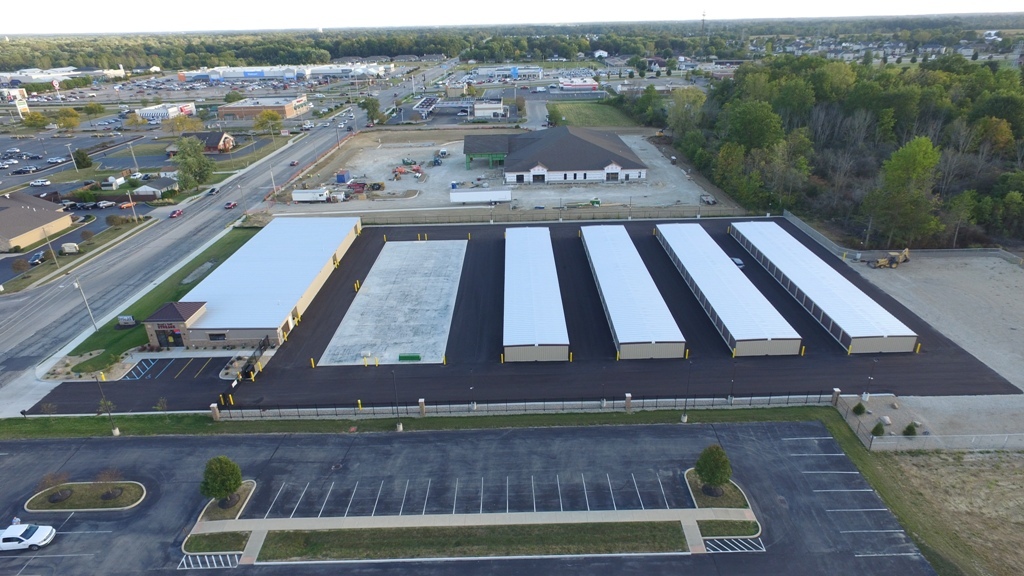
How do you design a typical storage site? Start by identifying the actual buildable space. Setbacks and easements should be identified. Where can the driveway be? Where will the city, county or state not allow one? There will usually be a retention pond at the lowest point of the property. A civil engineer will eventually need to calculate the size needed; it probably needs to be bigger than the client thinks). Ideally, there should be a survey in AutoCAD format available, and it should show elevation. If a client refuses to pay for civil engineering or survey work, this is a red flag that tells us they are not willing or able to invest in their own project.
Tips to guide clients through the site design process
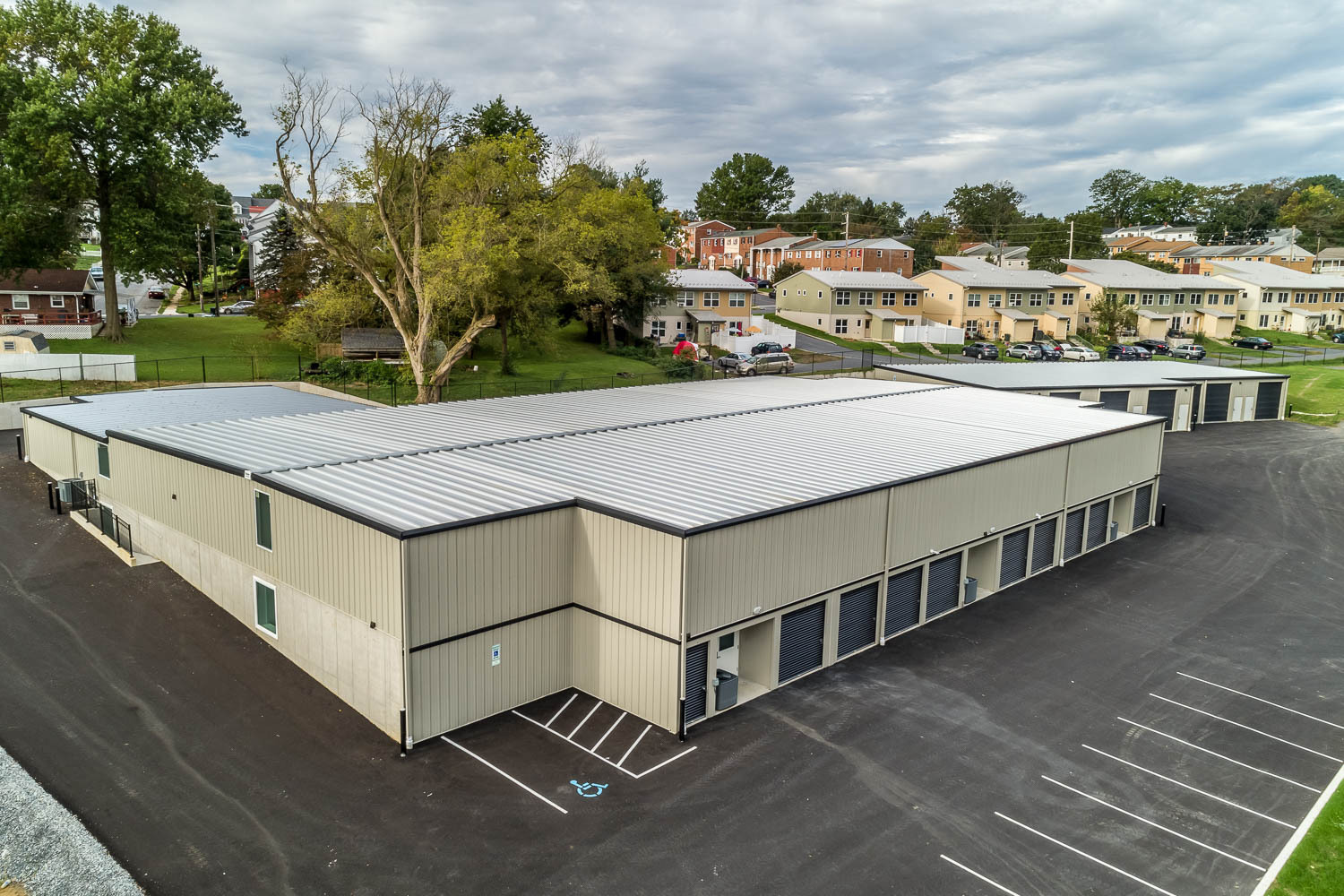
Storage types. Different markets will demand different average size units and amenities. Hiring a feasibility consultant to study your market and make recommendations is the ideal way to determine unit mix and storage types. But, not every developer is willing to invest in this reporting—especially for smaller projects. Studying nearby competitors and evaluating local pricing, discounting and available units is often the extent of the research.
To begin working on a rough layout, look at it from a broad level. Is it a rural market? Rural and suburban homeowners rent a larger average unit size. Forty-foot-wide buildings help you get there. Urban dwellers and renters tend to rent smaller units. Thirty-foot-wide buildings get you a smaller average unit size. Endwall closets are units on the 30 or 40 end walls, and this is a way to further increase the quantity of small units. Small storage units generate more income per square foot relative to their cost to build; they will make financial projections look good. The trick is to not build more than you can rent.
If your client wishes include climate-controlled units, these should generally be much wider buildings with interior hallways. Depending on the number of halls and access type, 60 to 80 feet is common.
If your client wishes include climate-controlled units, these should generally be much wider buildings with interior hallways. Depending on the number of halls and access type, 60 to 80 feet is common. These buildings add complexity to a project. Energy codes may dictate what levels of insulation are required. The buildings may be entirely climate controlled or may have a mix of traditional exterior access with climate-controlled interior. Or, they may use insulated sectional doors to offer exterior access drive-up storage. The exterior walls of the structure contain much of the cost, so larger, more square-shaped buildings offer the best revenue relative to construction cost.
Many new developers (particularly the ones that have not evaluated the cost to build compared to the rental income) feel that they have identified a need for camper/RV/boat storage units. These buildings typically offer 35- to 45-foot-deep by 12- to 20-foot-wide units. Door heights of up to 12 feet can accommodate most campers, but a 14-foot-tall door will be big enough for everything including fifth wheel and large motor coach or “diesel-pusher” type RVs.
Upgrading to 14-foot tall doors can add considerable cost, since you’ll need to use sectional doors rather than roll up at that size. A major issue when adding boat/RV storage isn’t the buildings at all—it’s the driveways. In order to back in a camper, you’ll need about 1.5 times the length of the entire rig. So, if you have a 30-foot camper attached to a 20-foot-long truck, about 75 feet of driveway is needed in front of it. Partly because of this, it’s difficult to make a good business case to build RV units unless the land is very cheap.
Arranging the buildings on the site. Once the desired storage types have been determined, you are ready to design a rough layout. Start with outlines. For gabled buildings, try to stay to 10-foot increments of width. Standard buildings are normally either 30 or 40 feet wide. Single-sided buildings along a lot line can eliminate the need for a fence, and are typically 20 feet wide. Driveways are normally 25 to 30 feet wide between buildings, with 30- to 35-foot-wide drives at the ends. Dead ends should be avoided—you do not want customers backing up a rental truck. They have enough trouble handling forward without hitting buildings.
For greater security on the site, lay out the buildings perpendicular to the street. If traffic (or a passing police officer) can see between the buildings, the layout helps to deter criminal activity and will help customers to feel safer.
Steve Hajewski is marketing manager at Trachte Building Systems, Sun Prairie, Wis., and regional manager for North Carolina sales. To learn more, visit www.trachte.com.